 05 Sep, 2026
How to Choose the Right Fencing for Your Sydney Property
Choosing the right fence for your Sydney property is about more than simply defining your boundary. A well-designed fence can improve privacy, security, street appeal and outdoor functionality while complementing the style of your home and landscape.
With options including timber fencing, Colorbond fencing, aluminium fencing, slat fencing and pool fencing, it can be difficult to know which solution is best for your property. The right choice will depend on your budget, property layout, desired level of privacy, maintenance expectations and local requirements.
Whether you are replacing an old boundary fence, upgrading your backyard or completing a new landscaping project, this guide will help you understand the key factors to consider when choosing fencing in Sydney.
Consider the Main Purpose of Your Fence
Before choosing a material or design, think about what you want your new fence to achieve. Different fencing styles are suited to different requirements.
For example, a solid timber or Colorbond fence can provide a high level of privacy, while aluminium slat fencing can create a more contemporary appearance without making the property feel completely enclosed.
Your fencing may be designed to:
- Improve privacy from neighbouring properties
- Define your residential property boundary
- Increase security around your home
- Create a safe area for children and pets
- Improve the appearance of your front or backyard
- Provide screening from nearby roads or properties
- Complement an existing landscaping design
- Create separate outdoor living or garden areas
Identifying your main priority makes it much easier to narrow down the available fencing options.
1. Choose a Fencing Material That Suits Your Property
The material you choose will affect the fence’s appearance, durability, maintenance requirements and overall cost.
Timber Fencing
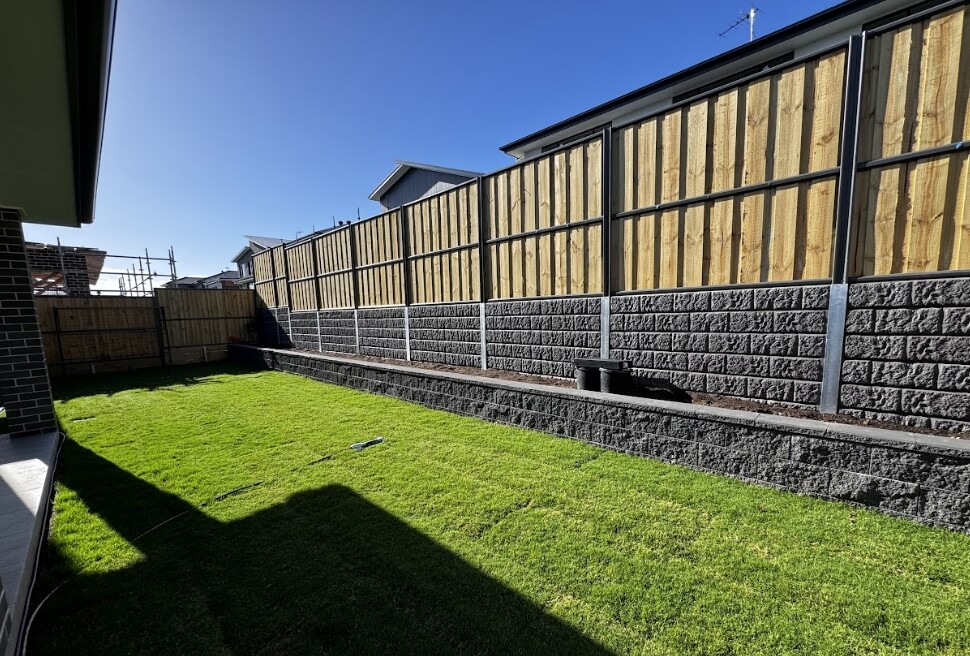
Timber fencing remains a popular choice for Sydney homes because of its natural appearance and versatility. Timber paling fences can provide excellent privacy and work particularly well with traditional gardens and family backyards.
Timber can also be painted or stained, giving homeowners flexibility when updating the appearance of their property.
However, timber generally requires more ongoing maintenance than some metal alternatives. Exposure to rain, sunlight and changing weather conditions can affect its appearance over time.
Colorbond Fencing
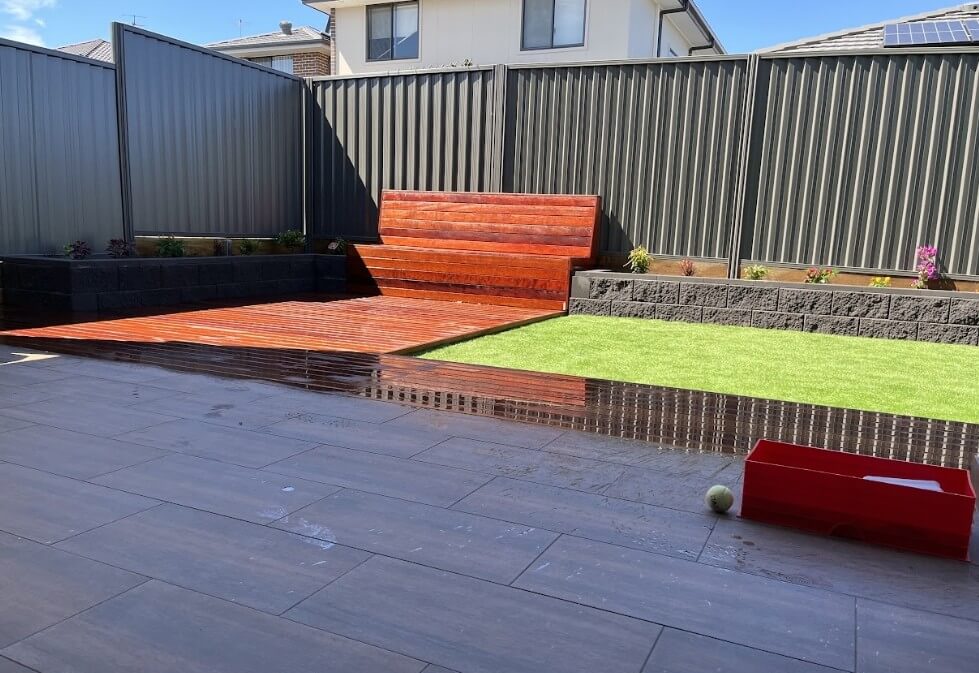
Colorbond fencing is a practical option for homeowners looking for a clean, modern and relatively low-maintenance boundary fence. Its solid panel design can provide strong privacy while its range of colours makes it easier to coordinate the fence with the house and surrounding landscape.
It is particularly suitable for contemporary homes where a simple, consistent appearance is preferred.
Aluminium Fencing
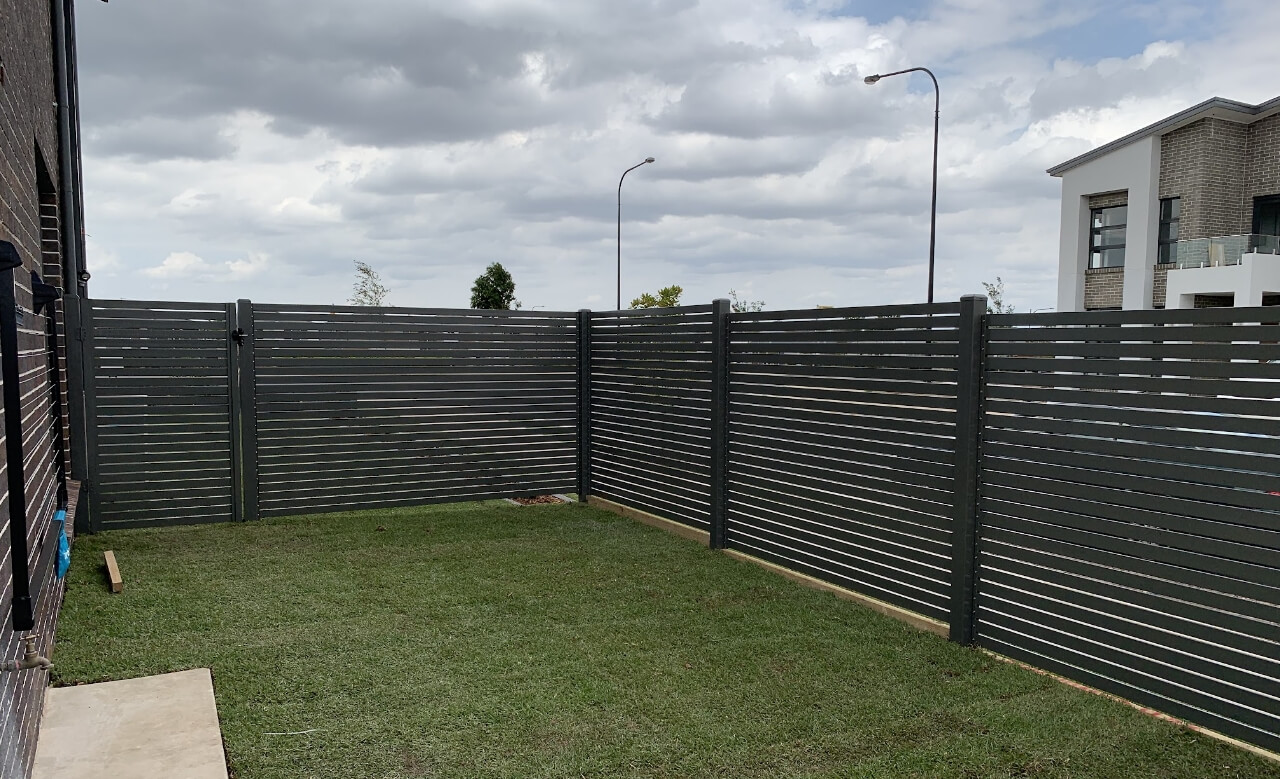
Aluminium fencing is lightweight, durable and well suited to modern residential properties. Aluminium slat fencing is especially popular where homeowners want privacy while maintaining a more open architectural appearance.
Its clean lines can work well alongside contemporary landscaping, paving, outdoor entertaining areas and modern homes.
Pool Fencing
If your property includes a swimming pool, fencing needs to be treated as a safety requirement rather than simply a landscaping feature. NSW pool fencing requirements include specific rules covering barrier height, gaps, gates and non-climbable zones.
For example, NSW Government guidance states that pool barriers generally need to be at least 1.2 metres high, while a boundary fence forming part of a pool barrier must be 1.8 metres high.
Always check the current requirements that apply to your pool and property before installation.
2. Think About Privacy
Privacy is one of the biggest reasons Sydney homeowners install or replace fencing.
If your backyard is close to neighbouring homes, a busy road or other properties, a solid fence can create a more private outdoor environment. Timber paling and Colorbond fencing are commonly considered when a higher level of visual screening is required.
For properties where complete screening is not necessary, slatted or semi-open fencing can provide a balance between privacy, airflow and natural light.
Consider where privacy matters most rather than automatically choosing the same fence design around the entire property.
3. Consider Your Home’s Architectural Style
Your fence should complement your home rather than look like a separate addition.
For a modern Sydney home, clean-lined aluminium slats, contemporary metal fencing or simple Colorbond panels may create a cohesive appearance.
For traditional or character-style properties, timber fencing or classic picket designs may be more appropriate.
When selecting your design, consider:
- Exterior wall colours
- Roof and window finishes
- Front garden design
- Driveway materials
- Existing gates
- Outdoor entertaining areas
- Overall architectural style
A well-matched fence can make the entire property look more considered and visually complete.
4. Think About Maintenance
Every fencing material requires some level of care, but maintenance requirements can vary significantly.
Timber may require periodic cleaning, painting, staining or other maintenance to preserve its appearance. Metal fencing can generally be easier to maintain, although its condition should still be inspected regularly.
When comparing fencing options, think beyond the initial installation. Consider how much time and money you are comfortable spending on maintenance over the life of the fence.
A slightly different material may make more sense if it reduces long-term maintenance for your lifestyle.
5. Consider Your Sydney Property’s Location
Sydney properties experience different environmental conditions depending on their location.
A property close to the coast may face greater exposure to salt and moisture, while homes on sloping blocks may require different installation approaches from properties on flat land.
The surrounding environment can influence the most appropriate material, finish and construction method.
If your property is in a bushfire-prone area, additional requirements may also apply. NSW planning guidance notes that fencing on bushfire-prone land may need to use non-combustible materials or hardwood in certain circumstances.
For this reason, it is worth assessing the site before choosing a fencing material.
6. Set a Realistic Fencing Budget
Your budget should include more than the price of the fence panels or materials.
The total fencing project may also involve:
- Posts and footings
- Gates and hardware
- Removal of an existing fence
- Site preparation
- Installation labour
- Difficult or sloping access
- Additional privacy features
- Painting or finishing
- Landscaping adjustments
A cheaper material is not necessarily the most economical choice over the long term. Compare the expected durability, maintenance and appearance alongside the initial installation cost.
Getting a clear quote based on your actual property is usually more useful than relying on a generic price per metre.
7. Check Local Council and NSW Requirements
Before installing a new fence, check whether planning or local council requirements apply to your property.
NSW Planning Portal guidance provides standards for fences that qualify as exempt development, including different requirements depending on the fence’s location and zoning. For example, certain residential side and rear boundary fences can be up to 1.8 metres under the relevant exempt-development provisions, while fences along a road boundary have different requirements.
Local council rules can also affect fence height, materials and placement.
If your property has special circumstances, such as a heritage listing, bushfire exposure, unusual boundaries or a swimming pool, check the applicable requirements before construction.
8. Think About Gates and Access
A fence and gate should be planned together.
Think about how people, vehicles, gardening equipment and other items will move around the property. A narrow pedestrian gate may be suitable for backyard access, while a driveway gate will require a completely different configuration.
Your gate should also complement the fence material and overall design.
For pool areas, gate requirements are particularly important. NSW pool safety guidance requires pool gates to close automatically and self-latch, with additional requirements concerning their direction of opening and surrounding climbable areas.
9. Consider Your Garden and Landscaping
A fence becomes part of the overall landscape, so consider how it will interact with plants, lawns, paving and outdoor living areas.
For example, a dark fence can provide a simple background for green planting, while timber can add warmth to a natural garden design. Slatted fencing can also work well alongside contemporary planting and outdoor entertaining spaces.
Avoid choosing a fence in isolation. Think about how it will look with the property as a whole.
10. Think About Your Neighbours
Boundary fencing can involve more than one property owner. In NSW, what constitutes a sufficient dividing fence can depend on factors including the existing fence, how the land is used, privacy needs, local council requirements and whether a swimming pool is involved.
Before replacing a shared boundary fence, discussing the proposed design with your neighbour can help avoid disagreements later.
It is also worth confirming the exact boundary location before construction begins, particularly if an existing fence appears to be incorrectly positioned.
11. Don’t Forget Security
If security is an important consideration, look at the fence height, visibility, gate design and access points as a complete system.
A solid fence can improve privacy, while a more open fence can allow visibility toward the street. The best approach depends on the property’s layout and your priorities.
Consider securing:
- Front entrances
- Side access points
- Driveways
- Backyard gates
- Garages and sheds
- Areas containing outdoor equipment
Good fencing should provide practical security without making the property feel unnecessarily enclosed.
12. Think About Long-Term Value
A quality fence is an investment in your property.
Rather than choosing a fence purely because it is inexpensive, consider how the material will look several years from now, how much maintenance it may require and whether the design will continue to suit your home.
A durable, well-installed fence can improve the appearance and functionality of your outdoor space while providing privacy and clearly defining your property.
Which Fencing Option Is Right for You?
There is no single fencing solution that is perfect for every Sydney property.
| Fencing Type | Best Suited For | Main Benefit |
|---|---|---|
| Timber Paling | Traditional homes and private backyards | Natural appearance and privacy |
| Colorbond | Modern residential boundaries | Low-maintenance privacy |
| Aluminium Slat | Contemporary properties | Modern style and durability |
| Picket Fencing | Front gardens and traditional homes | Open, welcoming appearance |
| Pool Fencing | Swimming pool areas | Safety and compliance |
| Open Metal Fencing | Front boundaries | Visibility and street appeal |
The right option depends on your property’s design, location, budget and practical requirements.
Common Mistakes to Avoid When Choosing a Fence
A little planning can prevent expensive changes later. Avoid these common mistakes when planning your Sydney fencing project:
- Choosing a fence based only on the cheapest quote.
- Ignoring local council or planning requirements.
- Forgetting to consider neighbouring properties.
- Selecting a material without considering maintenance.
- Choosing a design that clashes with the home’s architecture.
- Forgetting to plan gates and access points.
- Installing a fence without considering existing landscaping.
- Overlooking drainage, slopes and difficult site conditions.
- Treating pool fencing as a normal boundary fence.
- Failing to confirm the property boundary before construction.
Get Professional Advice Before Installing Your Fence
Choosing the right fence becomes much easier when your property’s specific requirements are considered from the beginning.
A professional fencing and landscaping team can assess the site, discuss suitable materials and help you select a design that balances privacy, appearance, durability, maintenance and budget.
For larger projects, fencing can also be coordinated with landscaping, paving, garden beds, retaining walls and outdoor living areas to create a more cohesive result.
Final Thoughts
The best fencing for your Sydney property should do more than mark the boundary. It should suit your home, provide the level of privacy and security you need, work with your landscaping and remain practical to maintain.
Timber, Colorbond, aluminium and other fencing options each have their own advantages. By considering your property’s location, architectural style, budget, maintenance requirements and applicable regulations, you can make a more informed decision.
If you’re planning a new fence or replacing an existing one, start by identifying what matters most to you. From there, you can choose a fencing solution that adds practical value and complements your Sydney property for years to come.
Recent Blogs