 05 Sep, 2026
Retaining Walls in Sydney: Benefits, Types & Design Ideas
Retaining walls are an important part of many Sydney landscaping projects. They can help manage changes in ground levels, reduce soil movement and turn difficult or sloping areas into more practical outdoor spaces. At the same time, a well-designed retaining wall can become an attractive feature that complements your garden and property.
From timber sleepers and concrete blocks to sandstone and concrete retaining walls, there are many options available for Sydney homeowners. The right choice depends on the slope of your property, soil conditions, drainage requirements, desired appearance and budget.
Whether you are landscaping a sloping backyard, creating new garden beds or improving the usability of an outdoor area, understanding the benefits and options can help you make the right decision.
What Is a Retaining Wall?
A retaining wall is a structure designed to hold back soil and create a difference in ground level between two areas. They are commonly used on sloping properties where soil needs to be supported to create a more stable and usable landscape.
Retaining walls can be purely functional, but they can also play an important role in the overall appearance and layout of a garden.
Depending on the property, retaining walls can be used to create:
- Level areas for lawns and gardens
- Raised garden beds
- Terraced landscaping
- Outdoor entertaining spaces
- Defined pathways
- Driveway edges
- Pool surrounds
- More usable areas on sloping blocks
Benefits of Retaining Walls for Sydney Properties
A properly planned retaining wall can provide both practical and aesthetic benefits.
1. Make Better Use of Sloping Land
Many Sydney properties have uneven or sloping terrain. Rather than leaving a steep section of the backyard unused, retaining walls can create multiple level areas.
These spaces can then be used for gardens, lawns, seating areas or outdoor entertaining.
2. Help Control Soil Movement
Retaining walls can provide support for soil where there is a significant change in ground level. When properly designed and constructed, they can help stabilise landscaped areas and reduce problems associated with soil movement.
The wall needs to be designed for the specific site, including its soil, slope and drainage conditions.
3. Improve Drainage Management
Water management is one of the most important considerations when building a retaining wall.
Poor drainage can increase pressure behind a wall and contribute to structural problems. Proper drainage solutions, such as suitable drainage aggregate, agricultural pipes and outlets where required, can help manage water around the structure.
Drainage should always be considered as part of the retaining wall design rather than treated as an afterthought.
4. Create Attractive Garden Features
Retaining walls can add structure and definition to a landscape.
A well-positioned wall can separate garden beds, frame a lawn or create an attractive transition between different levels of the backyard.
Materials such as sandstone, concrete blocks and natural stone can also add texture and character to the landscape.
5. Create More Usable Outdoor Space
One of the biggest advantages of retaining walls is their ability to transform an uneven backyard into functional spaces.
A sloping garden could potentially be redesigned into several levels, creating areas for:
- Lawn
- Gardens
- Outdoor dining
- Seating
- Children’s play areas
- Paths
- Vegetable gardens
- Entertaining spaces
Types of Retaining Walls in Sydney
Different retaining wall materials have different appearances, costs, maintenance requirements and structural characteristics. Choosing the right type starts with understanding the available options.
1. Timber Retaining Walls
Timber sleeper retaining walls are a popular option for residential landscaping.
They can provide a warm, natural appearance and work particularly well with gardens, lawns and other organic landscaping features.
Timber retaining walls can be suitable for smaller landscaping applications when appropriately designed and constructed.
Benefits of timber retaining walls:
- Natural appearance
- Works well with garden landscaping
- Versatile design options
- Can be relatively quick to install
- Suitable for many residential applications
However, timber can be affected by moisture and environmental exposure, so selecting suitable treated timber and using appropriate construction methods is important.
2. Concrete Sleeper Retaining Walls
Concrete sleepers offer a durable and modern alternative to timber.
They are available in different textures, colours and finishes, making them suitable for both practical retaining structures and contemporary landscape designs.
Concrete sleepers can be particularly useful where durability and low ongoing maintenance are priorities.
Benefits include:
- Durable construction
- Modern appearance
- Low maintenance
- Multiple design options
- Suitable for a range of landscaping styles
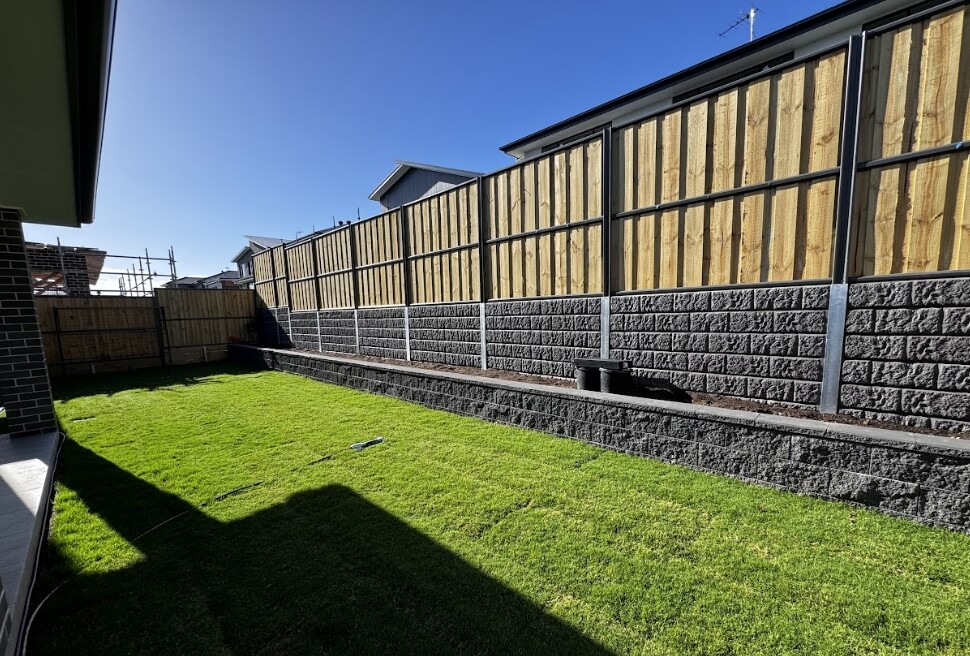
3. Concrete Block Retaining Walls
Concrete blocks can provide a strong and versatile retaining wall solution.
They can be used for different landscape designs and are available in various sizes and finishes. Depending on the design, concrete block walls can create a clean contemporary appearance.
For larger or more structurally demanding walls, engineering and professional design may be required.
4. Sandstone Retaining Walls
Sandstone is an excellent choice for homeowners who want a natural Australian landscape appearance.
Its earthy tones and natural texture can complement gardens, pathways and other outdoor features.
Sandstone retaining walls can work particularly well in landscapes designed around natural stone, native plants and organic materials.
Sandstone can provide:
- Natural visual appeal
- Unique stone textures
- Strong landscaping character
- Excellent compatibility with gardens
- A timeless outdoor appearance
5. Natural Stone Retaining Walls
Natural stone can create a premium and highly individual appearance.
Different stone types offer different colours, textures and patterns, allowing the wall to become a feature of the landscape rather than simply a structural element.
Natural stone can work particularly well alongside established gardens and high-quality landscape designs.
6. Brick Retaining Walls
Brick retaining walls can be a good choice when homeowners want the wall to complement an existing brick house or other masonry features.
Matching or coordinating the brickwork with the property can create a consistent and cohesive appearance.
How to Choose the Right Retaining Wall Material
There is no single material that is ideal for every Sydney property.
Consider the following factors before making your decision:
- Height of the retaining wall
- Length of the wall
- Soil conditions
- Drainage requirements
- Slope of the property
- Desired appearance
- Maintenance requirements
- Available budget
- Existing landscaping
- Surrounding structures
- Long-term durability
A professional assessment can help determine which materials and construction methods are appropriate for your particular site.
Retaining Wall Design Ideas for Sydney Homes
Retaining walls don’t have to look purely functional. With thoughtful landscaping, they can become one of the most attractive features of your backyard.
1. Create Terraced Garden Beds
Terraced garden beds are one of the most effective ways to use a sloping backyard.
Instead of having one steep section, multiple retaining walls can create a series of flatter planting areas.
Different levels can be planted with flowers, shrubs, ornamental grasses or suitable native plants to create a layered garden.
2. Combine Retaining Walls with Steps
If your backyard has different levels, steps can be incorporated between retaining walls.
This creates a practical connection between areas while making the change in elevation feel intentional.
Stone, concrete, timber and other suitable materials can be used to create steps that coordinate with the retaining wall.
3. Add Garden Lighting
Landscape lighting can highlight retaining walls after sunset.
Low-level lights, wall-mounted fixtures or strategically positioned garden lighting can emphasise textures and create safer pathways around different levels.
Lighting should be planned carefully so that it improves visibility without creating excessive glare.
4. Use Plants to Soften the Wall
Plants can help soften the appearance of retaining walls and integrate them into the surrounding garden.
Depending on the site, consider planting:
- Native shrubs
- Groundcovers
- Ornamental grasses
- Flowering plants
- Small feature plants
- Screening plants
- Suitable trailing plants
Plant selection should take into account sunlight, soil conditions, available space and water requirements.
5. Create a Feature Wall
Instead of trying to hide the retaining wall, make it a focal point.
A carefully selected stone, sandstone or textured concrete finish can create an attractive feature that draws attention to the garden.
Feature walls can work particularly well around entertaining areas, gardens and outdoor seating.
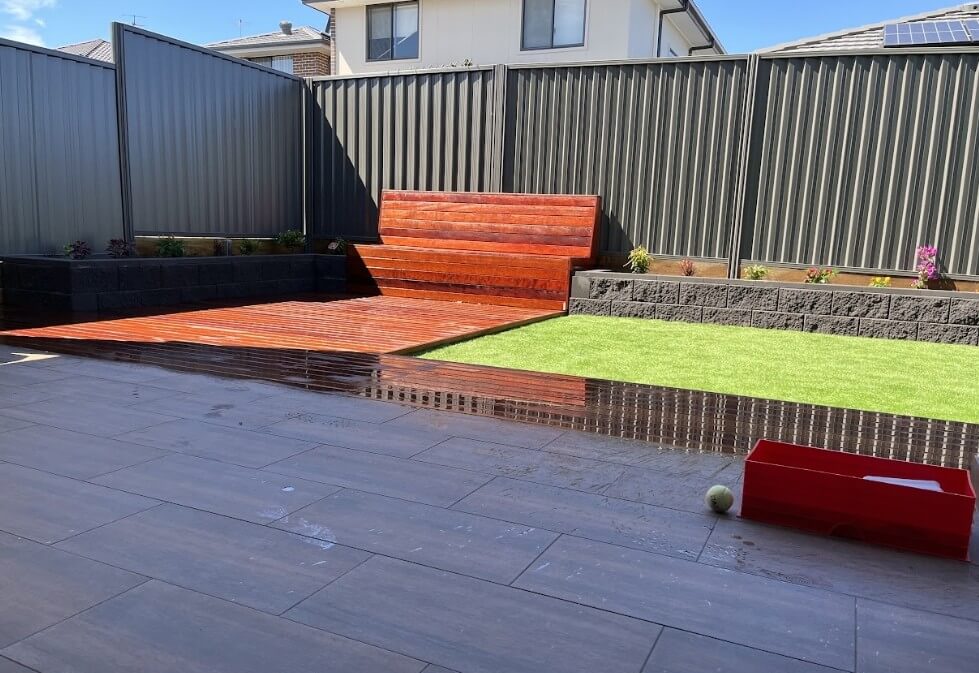
6. Combine Retaining Walls with Decking
Retaining walls and decking can work together to create a multi-level outdoor living space.
For example, a retaining wall can establish a level platform for a deck while another section of the garden remains dedicated to planting or lawn.
This can be especially useful for sloping Sydney backyards.
7. Add Seating Areas
A retaining wall can sometimes be incorporated into the overall design of an outdoor seating area.
Where structurally appropriate, the surrounding landscape can be designed with built-in seating, paving and garden beds to create a dedicated entertaining zone.
Retaining Walls and Drainage
Drainage is one of the most important aspects of retaining wall construction.
Water that accumulates behind a wall can increase pressure on the structure. For this reason, retaining wall designs commonly incorporate drainage measures appropriate to the site.
Depending on the project, drainage may involve:
- Free-draining material behind the wall
- Agricultural drainage pipes
- Drainage outlets
- Proper surface drainage
- Suitable grading around the wall
- Connection to an appropriate stormwater system where required
The exact drainage solution depends on the site’s conditions and the wall design.
If you notice water pooling around an existing retaining wall, leaning, cracking or other changes, it is worth getting professional advice rather than simply covering up the visible problem.
Retaining Walls on Sloping Blocks
Sloping properties can present additional landscaping challenges, but they can also provide opportunities for creative design.
Instead of attempting to create one large flat area, a series of smaller terraces can sometimes produce a more natural and practical result.
A terraced design can provide:
- Upper garden areas
- Intermediate planting zones
- Lower lawn areas
- Outdoor entertaining spaces
- Connecting pathways and steps
The appropriate design depends on the slope, available space, soil and structural requirements.
Retaining Wall Regulations in Sydney
Before constructing a retaining wall, check the planning and building requirements that apply to your property.
NSW rules can vary depending on factors such as the wall’s height, location, proximity to boundaries and whether other structures or drainage works are involved.
Some retaining walls may qualify for exempt development under specific conditions, while other projects may require approval or additional documentation.
For example, NSW Planning Portal guidance sets conditions for certain retaining walls under exempt development provisions, including requirements relating to height and location.
If your retaining wall is close to a boundary, supports a significant amount of soil or is part of a larger landscaping project, check the applicable requirements before construction.
Common Retaining Wall Mistakes to Avoid
A retaining wall needs careful planning because problems with drainage, foundations or structural design can become expensive to fix.
Avoid these common mistakes:
- Building without assessing the site conditions.
- Choosing a material based only on appearance.
- Ignoring drainage behind the wall.
- Failing to consider soil pressure.
- Building too close to existing structures without proper assessment.
- Forgetting how water will move across the property.
- Choosing plants without considering their root systems.
- Failing to check applicable planning requirements.
- Using unsuitable materials for the site conditions.
- Treating a structural retaining wall as a simple DIY landscaping feature.
For taller or structurally significant walls, professional design and engineering advice may be essential.
How Much Does a Retaining Wall Cost in Sydney?
The cost of a retaining wall can vary considerably from one property to another.
Factors that can affect the overall project cost include:
- Retaining wall material
- Wall height and length
- Ground conditions
- Site accessibility
- Excavation requirements
- Drainage requirements
- Engineering or certification
- Removal of an existing wall
- Landscaping around the wall
- Labour and installation complexity
For this reason, an on-site assessment and detailed quote are generally more useful than relying on a generic cost-per-metre estimate.
Should You Build or Replace a Retaining Wall?
If an existing retaining wall is showing signs of movement, deterioration or drainage problems, it may need professional assessment.
Look out for signs such as:
- Visible leaning
- Significant cracking
- Bulging sections
- Soil movement
- Water accumulating behind the wall
- Damaged or deteriorated materials
- Gaps developing between sections
These signs do not necessarily mean the wall must be replaced, but they indicate that the structure should be assessed.
Integrating Retaining Walls into Your Landscape Design
The best retaining walls are planned as part of the wider landscape rather than as standalone structures.
Think about how the wall will connect with your:
- Garden beds
- Lawn
- Decking
- Paving
- Outdoor entertaining areas
- Steps
- Fencing
- Plants
- Lighting
- Driveway
Using complementary materials and consistent design details can help the retaining wall feel like a natural part of the property.
Final Thoughts
Retaining walls can completely change the way a Sydney backyard looks and functions. They can help manage sloping land, create usable levels, support garden areas and introduce attractive architectural features into your landscape.
Whether you prefer natural timber, sandstone, concrete sleepers, masonry or another suitable material, the right choice depends on your property’s conditions, design goals and long-term requirements.
Good drainage, appropriate construction and careful planning are just as important as the appearance of the finished wall. By considering these factors from the beginning, you can create a retaining wall that is practical, durable and visually suited to your Sydney property.
If you’re planning a retaining wall as part of a new landscaping project, professional advice can help you determine the most suitable design, materials and construction approach for your site.
Recent Blogs